



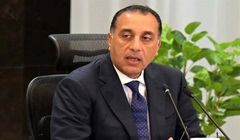
Egypt will slow work on energy-intensive mega-projects for two months, introduce mandatory work-from-home on Sundays at government workplaces, and cut government fuel allocations by 30 percent, Prime Minister Mustafa Madbouli announced, citing the impact of regional tensions.
The measures aim to curb energy consumption after Egypt's monthly petroleum import bill more than doubled — rising from $1.2 billion in January to $2.5 billion in March — as a result of the US-Israel war on Iran.
Speaking at a cabinet press conference, Madbouli outlined the government's contingency plans amid heightened regional tensions, noting that further steps may be necessary should the US-Iran conflict persist for several more months.
He said all ministers have been ordered to identify ongoing mega-projects with high diesel and gasoline consumption to implement the two-month slowdown.
Starting the first Sunday of April, a mandatory remote work policy will take effect across most government sectors, he pointed out.
The decision, he added, followed a study by the Ministry of Electricity showing that reduced office attendance significantly lowers both building electricity usage and fuel consumption from transportation.
The policy does not apply to essential utilities — including water, gas, and sewage treatment — or to healthcare facilities such as hospitals and emergency services.
Schools and universities will also remain in-person for the final six weeks of the academic year to avoid disruption, according to Madbouly.
Madbouli said that while the current plan targets one remote workday per week, the government is prepared to expand that to two days if the energy crisis persists.
In parallel, the government raised fuel and gas prices by between 14 percent and 30 percent, effective 10 March.
During the presser, the prime minster asserted that recent "exceptional" fuel hikes cover less than one-third of actual global cost increases.
To shield citizens from a major inflationary spike, he stated that the government continues to absorb the bulk of the burden while waiting for markets to stabilize.
Madbouli explained that the government is applying a dual-track strategy. While partial price adjustments help mitigate the fiscal deficit, he stressed that the primary focus must be on a national push for consumption rationalization.
He emphasized that price hikes alone cannot solve the crisis; reducing overall fuel consumption is now the most critical path to economic stability.
He reiterated that the government’s primary goal is to maintain industrial production while navigating the global fallout of ongoing regional conflicts.
Source: Al-Ahram Online