



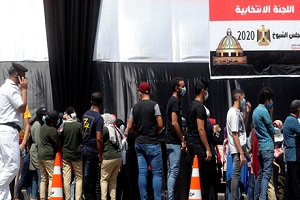
Egyptians started voting on Tuesday morning for the newly
created Senate amid tight measures aimed at reining in the spread of the
coronavirus.
Around 63 million Egyptians of the country's population of more than 100 million people are eligible to cast ballots.
The two-day vote for the second chamber of parliament is being held at some 14,000 polling stations across the country, voters wearing protective masks were seen standing in line outside polling stations in several parts of Cairo as they waited to cast their vote.
Egyptian President Abdel-Fattah El-Sisi cast his ballot at a school in Cairo's Heliopolis district soon after voting opened at 9am. Other top government officials and high-profile figures voted early in the day including Prime Minister Mostafa Madbouly and Pope Tawadros II, the head of the Coptic Orthodox Church.
The prime minister called on Egyptians to take part in the vote, which he said is aimed at "bolstering democracy" and "enriching political life in Egypt," the cabinet said in a statement, health Minister Hala Zayed, Information Minister Osama Heikal, Trade Minister Nevine Gamea, and Irrigation Minister Mohamed Abdel-Aty were among the officials who cast their ballots early on Tuesday.
The Council of Senators will have no legislative powers and will mainly have an advisory role. It is created in place of the Shura Council, an upper house of parliament that was dissolved in 2014, the polls are being supervised by 18,000 judges assisted by 120,000 clerks. Polling stations will be open from 9am to 9pm local time.
Chairman of the National Elections Authority Lasheen Ibrahim reminded voters earlier this week that voting is mandatory and that those who do not vote face a fine of up to 500 pounds ($32) – a penalty imposed in previous elections but has not been widely enforced.
Egypt’s Armed Forces and the interior ministry have put in place intensified security measures to secure the elections and ensure a "safe climate" for citizens casting their ballots during the vote, the military said, meanwhile, the health ministry is providing around 2,800 ambulances and around 7,000 medical staff across polling locations nationwide.
Source: Ahram Online