



The Petrified Forest Area in Maadi
Date of Announcement: 1989
Area: 7 Km2
Type: Geological protected area and a national heritage
Distance from Cairo: 30 Km
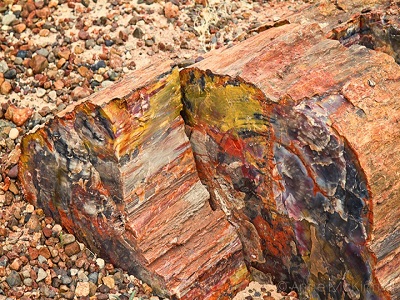
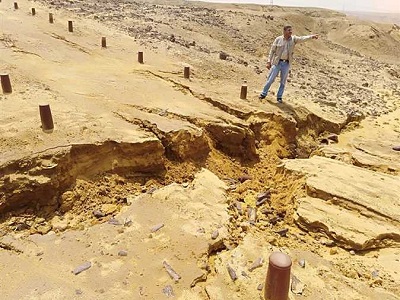
The Petrified Forest is characterized by a high concentration of petrified tree trunks and stems within the Gebel El-Khashab Formation, which dates back to the Oligocene Epoch. The formation consists of layers of sand, gravel, clay, and petrified wood, ranging from 70 to 100 meters in thickness.
The forest is notably rich in remains, trunks, and stems of large petrified trees, which appear as rock-like pieces with cylindrical cross-sections ranging from a few centimeters to several meters in size. These remains are clustered one of the branches of the ancient Nile River, during prehistoric geological ages, carried these trees over long distances and deposited them in this location, where they together, forming what is known as a petrified forest.
It is therefore believed that the Petrified Forest in Maadi was formed when one of the branches of the ancient Nile River, during prehistoric geological ages, carried these trees over long distances and deposited them in this location, where they subsequently became fossilized (petrified).
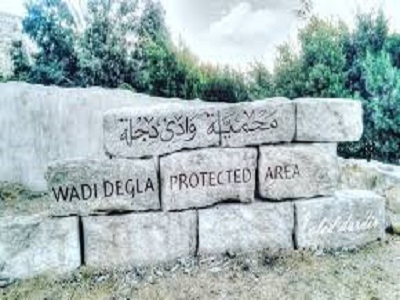
Wadi Degla Protected Area
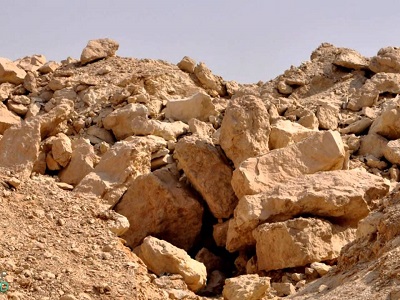
Wadi Degla is one of the important valleys extending from east to west for approximately 30 kilometers. It cuts through limestone rocks that were deposited in a marine environment during the Eocene Epoch in the Eastern Desert, around 60 million years ago. As a result, the area is rich in fossils. The limestone formations rise approximately 50 meters on both sides of the valley, which is fed by several smaller valleys from both sides.
The valley is home to a variety of wildlife, including mammals such as gazelles, ibex, mountain rabbits, red foxes, bushy-tailed rats, jerboas, spiny mice, and small-tailed bats. It also hosts numerous insect species, including dragonflies, ladybugs, tiger butterflies, antlions, and many others. Eighteen species of reptiles have also been recorded in the area.
Over the ages, rainwater flowing down the waterfalls has eroded the limestone rocks, forming what is known as the Wadi Degla Canyon, which bears some resemblance to the Grand Canyon in the United States.
To Contact the Central Administration for the Protection of Nature:
Telephone: 0220532502 / 0220532504 / 0220532503
Fax: 0220532505
📅Update: 2026