



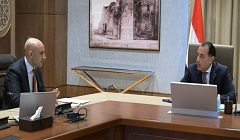
Egypt’s Prime Minister Mustafa Madbouli met with Mohammad Abdel Latif, Minister of Education and Technical Education, to review the ministry’s ongoing initiatives.
Discussions included ensuring student attendance, the proposed alternative secondary education system (the “Baccalaureate”), and broader efforts to develop the basic and technical education systems.
During the meeting, Abdel Latif highlighted progress within the educational process. “Student attendance rates are generally high, reaching approximately 85%,” he stated.
The proposed alternative to the General Secondary Education Certificate (Thanaweya Amma), known as the “Baccalaureate,” was also reviewed. According to the Minister, community dialogue sessions have involved discussions with education experts and specialists.
Abdel Latif emphasized the Ministry’s initiatives regarding technical education, referencing his visit last February to the Salesian Institute “Don Bosco” alongside the Italian Minister of Education and the Italian Ambassador to Cairo. During the visit, they inaugurated the Italian Village model within the school.
“Coordination is underway with prominent business leaders from the private sector to facilitate the employment of graduates from these schools,” Abdel Latif confirmed.
Minister Abdel Latif noted that letters of intent had been signed to create a joint platform promoting convergence between education systems and to establish the Egyptian-Italian Employment Centre.
A cooperation protocol was signed between the Italian Agency for Development Cooperation (AICS) and the Federation of Egyptian Industries (FEI) focusing on technical and vocational education and training (TVET) to support Egyptian higher technical institutes.
The Minister clarified that the collaboration with Italy extends to other areas, noting ongoing coordination with the Italian Ambassador to establish new hotel schools in Egypt via partnerships with the private sector and Italian expertise.
The partnership also aims to strengthen applied technology school projects in sectors such as textiles, mining, pharmaceuticals and agriculture. According to Abdel Latif, these projects “play a key role in development by qualifying highly skilled and trained technical workers.”
Abdel Latif also highlighted cooperation between the Ministry of Education and Technical Education, and the Ministry of Agriculture and Land Reclamation, to strengthen aspects of cooperation with the private sector in developing agricultural technical schools. These efforts align with state plans to improve technical education outcomes.
Moreover, the minister reviewed efforts in cooperation with private sector investors to benefit from the existing 172 agricultural schools, aiming to achieve development in the agricultural sector. This includes preparing technical workers trained in modern techniques, irrigation methods, livestock management and organic crops, while aligning agricultural education with labour market needs and creating new specializations.
Source: Daily News Egypt