



Egypt has extended its project promoting circular economy practices in the single-use plastics value chain by one year, pushing its completion to 2027 instead of 2026. The extension comes as part of national efforts to curb plastic pollution and accelerate the transition toward sustainable production and consumption models.
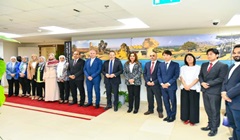
Local Development Minister and Acting Environment Minister Manal Awad chaired the project’s second steering committee meeting, which brought together senior government officials, representatives of the Japanese Embassy, and industry stakeholders.
The project is funded through a grant from the Government of Japan in co-operation with the United Nations Industrial Development Organization (UNIDO).
Awad described the initiative as a model of effective development co-operation to combat plastic pollution, which poses a growing threat to biodiversity and livelihoods.
Awad also noted that the project aims to reduce plastic waste and promote circular economy practices across industries, particularly in the production of single-use packaging materials.
The minister called for prioritizing the establishment of factories producing plastic alternatives across various governorates to reduce transport costs and create conditions for plastic-free cities that could serve as national models.
Moreover, Awad urged the preparation of a detailed timeline and financial plan for upcoming phases, emphasizing industrial support, stakeholder awareness, and the development of policies and legislation mandating a gradual shift to plastic alternatives.
The project has already achieved notable milestones, including the issuance of five new Egyptian standards for alternative plastic bags, the launch of a nationwide awareness campaign titled “Reduce It,” and an assessment of local laboratories to strengthen their capacity to verify compliance with the new standards.
In partnership with Nile University, a comprehensive market study was conducted to assess raw material availability and industrial readiness.
The project also implemented training programs to build the capacity of small and medium-sized enterprises (SMEs) and launched pilot recycling initiatives in collaboration with private sector companies.
A representative of the Japanese Embassy described the initiative as a “presidential project” and a testament to the strategic partnership between Egypt and Japan in addressing global plastic pollution.
UNIDO commended its long-standing co-operation with Egypt, noting that the country is among the largest beneficiaries of its programs, while the Federation of Egyptian Industries called for expanding project funding to include more industrial facilities nationwide.
Source: Daily News Egypt