



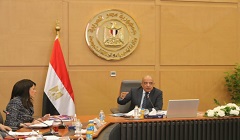
Mahmoud Esmat, Minister of Electricity and Renewable Energy, emphasized that providing a high-quality, reliable, and stable electricity supply is a central objective of the current work plan. This strategy involves advancing Egypt’s energy transition, expanding renewable energy projects, increasing reliance on clean energy, and safeguarding the environment. Additionally, efforts are focused on improving the efficiency of the electricity grid, enhancing performance, and reducing fuel consumption.
Minister Esmat made this statement during the Ordinary General Assembly of the Egyptian Electricity Transmission Company (EETC), which he chaired with Dr. Rania Al-Mashat, Minister of Planning and Economic Development, in attendance.
The meeting, held at the Ministry’s headquarters in the New Administrative Capital, reviewed the company’s activities during the 2023/2024 fiscal year and approved its financial statements.
Esmat highlighted the ministry’s ongoing modernization of the grid, transitioning from a traditional to a smart network capable of handling significant generation capacities, particularly from renewable sources. The goal is to ensure efficient energy transmission with minimal losses and the optimal use of resources. He underscored the importance of key projects such as agricultural land reclamation, noting the electricity sector’s role in supporting the transmission network to meet global standards. This is achieved through economic production, quality-focused operations, resource optimization, environmental protection, and robust human and technological capabilities.
Mona Rizq, Chairperson of the EETC, presented a report detailing the company’s significant achievements in the 2023/2024 fiscal year. The company invested approximately EGP 7.6bn in renewing and expanding high and ultra-high voltage stations and lines, developing regional control centers, and integrating renewable energy projects into the grid.
Rizq also highlighted projects aimed at enhancing power interconnectivity with neighboring countries, reflecting the ministry’s vision of positioning Egypt as a regional energy hub.
Ongoing regional interconnection projects with Jordan, Libya, and Sudan are being enhanced, with further plans for connections with Saudi Arabia, Cyprus, the Gulf Cooperation Council, Greece, and Italy.
In concluding the session, Minister Esmat commended the EETC’s efforts to strengthen the national transmission network, improve efficiency, and accommodate additional renewable energy capacity. He reaffirmed the commitment to expanding and modernizing the grid, particularly in Upper Egypt and underserved regions, while adhering to world-class quality standards and advanced technological systems. The ministry continues to prioritize human resource development through training in cutting-edge energy technologies and knowledge transfer initiatives.
Source: Daily News Egypt