


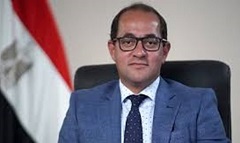
Finance Minister Ahmed Kouchouk said that the 2025/2026 state budget represents a social vision built around the needs of ordinary Egyptians, not just a financial plan.
In the 12th "Citizen Budget" report, he said that this budget aims for economic growth, stability, a bolstered private sector role, and stronger safety nets for the population.
Kouchouk affirmed that the government will continue investing in education and healthcare as long-term priorities, viewing them as essential pillars for future development.
He emphasized that the current budget responds to the needs of all citizens, including women, children, the elderly, and young people, with special attention to those most affected by inflation and economic pressures.
The Minister also revealed upcoming tax relief initiatives designed to support private businesses and stimulate broader economic activity.
The report outlined a significant increase in budget allocations for subsidies, grants, and social benefits, amounting to EGP 742.6 billion. These include major spending on energy and food subsidies, social pension programs, such as Takaful and Karama, social housing, natural gas delivery to households, and national health insurance for students, women, and children.
Additional investments target the expansion of healthcare access and continued support for key medical initiatives, including medicine supply and hospital infrastructure.
The budget sets aside EGP 742.6 billion for subsidies, grants, and social benefits. This includes EGP 150 billion for fuel and electricity subsidies, EGP 160 billion for food subsidies, and EGP 54 billion for social pensions (Takaful and Karama). It allocates EGP 13.6 billion for social housing, EGP 3.5 billion for expanding access to natural gas in homes, EGP 5.9 billion for health insurance targeting students, female heads of households, and children, and EGP 21.9 billion for medicines and healthcare services.
Kouchouk said the government will issue new tax incentives for businesses to stimulate investment. He also said public funds will focus on healthcare, education, and vulnerable groups, while inflation control and fair distribution of services and development gains will shape spending decisions.
For his part, Deputy Finance Minister Yasser Sobhi added that the budget reflects balanced policies aimed at maintaining fiscal stability while accelerating economic growth.
He explained that the state is committed to reducing public debt and improving the efficiency of public spending. Meanwhile, the Ministry of Finance continues to implement structural reforms aimed at enhancing the business climate and boosting Egypt's competitiveness in global investment rankings.
Meanwhile, Sara Eid, budget transparency advisor, highlighted the improvement of Egypt's ranking in global indices of budget transparency and public participation, noting that the Finance ministry plans to deepen these community engagement practices to ensure that public investment decisions reflect the real needs of the people.
According to Eid, the goal is to build a more inclusive, transparent, and responsive fiscal system that empowers citizens to shape the path of development alongside government institutions.
Source: State Information Service